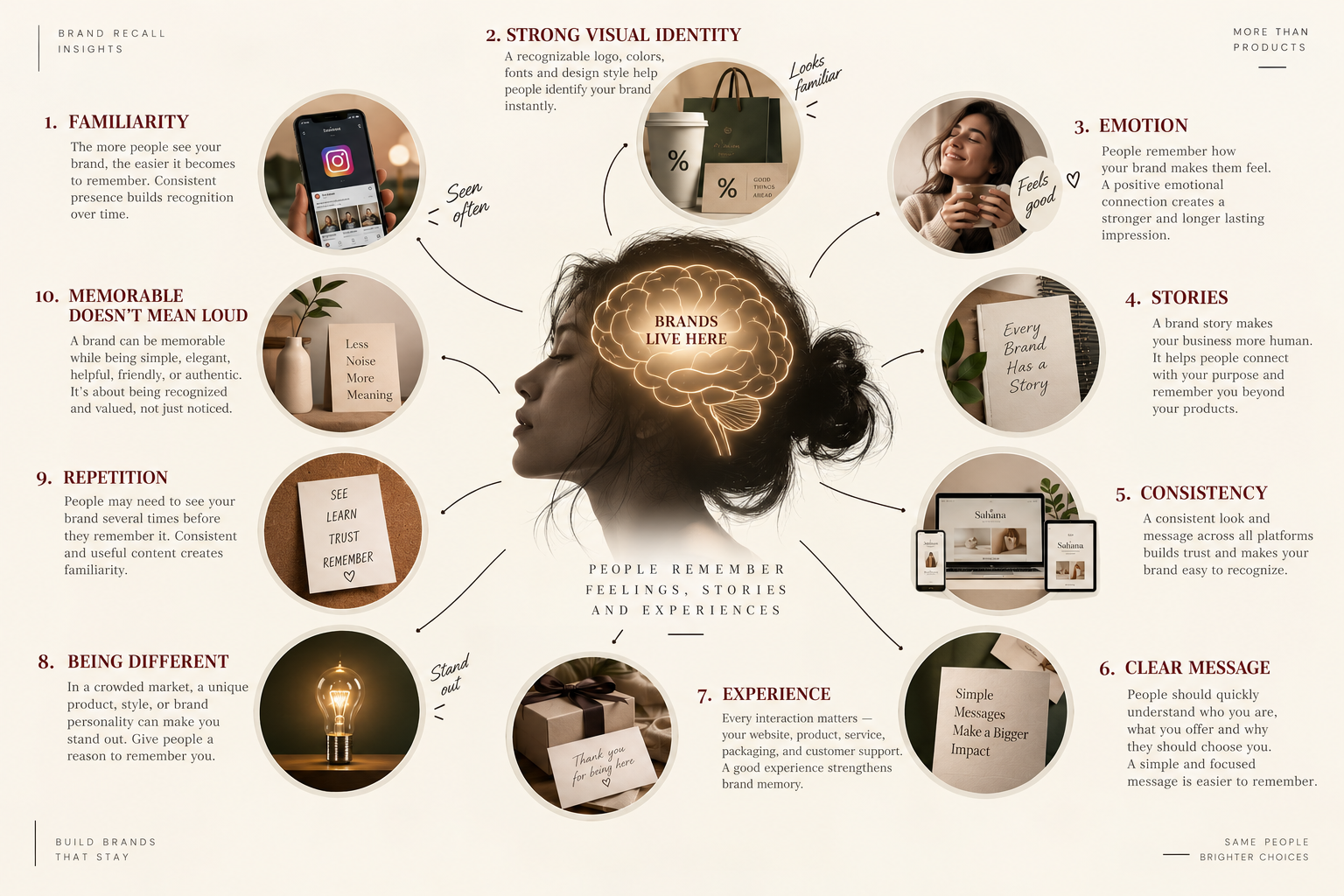
Think about the last time you needed a product. You probably didn’t start by thinking about every brand in the market. Instead, a few familiar names probably came to mind immediately. That is the power of brand recall.
Some brands are easy to remember, while others disappear from our minds soon after we see them. Why do some brands stay in our minds while others are quickly forgotten? It is not always because they have the biggest advertising budget. Often, memorable brands understand how to create a strong and consistent brand experience that people can recognize across different platforms. A memorable brand may have a distinctive logo, a familiar color palette, a unique message, or a particular tone of communication. These small details can help people recognize the brand even before they see its name.
But being memorable is about more than just visual identity. The way a brand communicates, the value it provides, and the experience it creates for customers can all influence how people remember it. When a brand consistently delivers something meaningful, it becomes easier for customers to connect with and remember it. In a crowded digital world, customers are exposed to countless advertisements, social media posts, videos, and brand messages every day. Because of this, businesses need more than visibility—they need to create experiences that stand out, build familiarity, and stay in the customer’s mind. That is why understanding how brands build lasting brand recall can be an important part of creating a successful digital marketing strategy.
Familiarity Makes a Brand Easier to Remember
We are exposed to hundreds of advertisements, posts, videos, and brand messages every day. Most of them are quickly forgotten. Brands that appear consistently, however, can become more familiar to us. When we repeatedly see the same name, visual style, message, or product, the brand becomes easier to recognize. This familiarity can make a brand feel more recognizable when customers are ready to make a purchase.
For example, you may recognize a brand simply by its colors, logo, packaging, or style before even seeing its name. This is one reason consistent branding plays such an important role in building brand recognition. Familiarity doesn’t necessarily mean that someone is ready to buy. However, when a brand becomes familiar, it has a better chance of coming to mind when the customer eventually needs a particular product or service.
Strong Visual Identity Creates Recognition
Memorable brands usually have a recognizable visual identity. This can include:
- A distinctive logo
- Consistent colors
- Recognizable fonts
- Unique packaging
- Consistent photography or design style
- A memorable overall look
When these elements are used consistently, people begin to associate them with the brand. Over time, visual elements can become powerful reminders of the business. You don’t always need a complicated design. Sometimes, simple and consistent branding is more memorable than something overly complicated. Visual consistency is especially important when customers interact with a business across different platforms. If the same colors, fonts, images, and design style appear on Instagram, a website, advertisements, and packaging, customers can more easily connect those experiences to the same brand.
Emotion Makes Brands More Memorable
People don’t remember information only because they saw it. They often remember how something made them feel. A brand that makes customers feel excited, comfortable, confident, inspired, or valued can create a stronger connection. This emotional connection can make the brand more meaningful than a business that only focuses on selling a product. This is why successful brands often focus on emotions rather than simply listing product features. Instead of only saying what a product does, they show customers how it can make their lives better.
Two businesses may offer similar products, but the brand that creates a stronger emotional connection may be easier to remember. Understanding your audience’s needs, expectations, and emotions can therefore help businesses create marketing messages that feel more personal and meaningful.
Stories Are Easier to Remember
Stories can make a brand feel more human. A brand story can explain:
- Why the business started
- What the brand believes in
- What problem it wants to solve
- What makes it different
- What it wants customers to experience
When people connect with a story, they may remember the brand more easily than if they were simply shown an advertisement. A good brand story can also communicate personality and values. Instead of feeling like they are interacting with a company that only wants to sell something, customers can understand the people and ideas behind the business. This can make a brand feel more relatable and create a stronger connection with its audience.
Consistency Builds Recognition
Imagine a brand that uses one style on Instagram, another style on its website, and completely different messaging in its advertisements. It may become difficult for customers to recognize it. Consistency helps create a clear brand identity. Your website, social media, advertisements, packaging, and other marketing materials should feel like they belong to the same brand. The goal is to make someone think, “I know this brand,” even before they read the name.
Consistency doesn’t mean every piece of content has to look exactly the same. Brands can still experiment with different formats and creative ideas while maintaining their core identity. The important thing is to create a recognizable foundation that customers can associate with your business.
A Clear Message Helps People Understand You
Memorable brands usually communicate a clear idea. People should be able to understand:
Who are you?
What do you offer?
Why should they choose you?
If your message keeps changing, people may struggle to understand what your brand represents. A clear and simple message is easier to understand and remember. A clear message also helps attract the right audience. When people quickly understand what your business offers and what makes it valuable, they can decide whether your brand is relevant to their needs. Your brand doesn’t need to say everything at once. Sometimes, communicating one clear and meaningful idea can be more powerful than trying to explain everything
Experiences Matter More Than Advertising Alone
A memorable advertisement may introduce someone to your brand. But the customer experience can determine whether they remember you positively. Consider everything a customer experiences:
- Your website
- Social media
- Communication
- Product or service
- Packaging
- Customer support
- After-sales service
If the experience matches what your brand promises, it can strengthen the relationship with the customer. A business may create an excellent first impression through advertising, but every interaction that follows can either strengthen or weaken that impression.
For example, a professional website combined with helpful communication and reliable service can reinforce the image created by your marketing. On the other hand, a poor customer experience can make people remember the brand for the wrong reasons.
Being Different Helps
In crowded markets, being different can make a brand easier to remember. Your difference doesn’t have to be dramatic. It could be:
- A unique product
- A different way of communicating
- A distinctive visual style
- Exceptional customer service
- A specific niche
- A memorable brand personality
The important thing is to give people a reason to remember you. Being different also doesn’t mean simply following every trend. A brand can stand out by understanding its audience and developing an identity that feels authentic to its business. The goal isn’t to be different just for attention. It is to have something meaningful that customers can associate with your brand.
Being Different Helps
In crowded markets, being different can make a brand easier to remember. Customers are constantly comparing businesses that offer similar products and services, so having something distinctive can help a brand stand out. That difference could come from a unique product, a distinctive visual style, a particular way of communicating, exceptional customer service, a specific niche, or a memorable brand personality.
However, being different doesn’t mean trying to be unusual simply to attract attention. A brand should have a meaningful reason for being different. The strongest brands often find something that is genuinely unique about their business and build their identity around it. This gives customers a clear reason to remember them
Repetition Matters
People may not remember a brand after seeing it only once. Repeated exposure can help build familiarity and strengthen brand recall. A customer might see an Instagram post today, come across a Google advertisement a few days later, read a blog post the following week, and eventually visit the website when they need the product. Each interaction creates another opportunity for the brand to become familiar.
However, repetition doesn’t mean showing the exact same advertisement again and again. Brands can communicate the same core message through different types of content, formats, and platforms. The goal is to remain present without becoming repetitive or annoying.
Memorable Doesn't Mean Loud
Being memorable doesn’t mean constantly trying to get attention. A brand can be memorable while being simple, elegant, helpful, friendly, professional, or authentic. Sometimes, businesses try too hard to follow trends or create shocking content because they believe that attention automatically leads to memorability. But attention alone doesn’t necessarily create a lasting connection. A brand that understands its audience can choose a communication style that feels natural and genuine. Being memorable is not about being the loudest brand in the market. It is about being a brand that people can recognize, understand, and connect with.
How Can a Small Business Become More Memorable?
Small businesses don’t need enormous marketing budgets to become memorable. They can start by creating a clear identity and maintaining it consistently. Understanding the target audience is also important. When a business knows what its customers care about, it can create content and experiences that are more relevant to them. Useful content can give people a reason to interact with the brand, while a consistent visual identity can make the business easier to recognize.
Small businesses can also use their size as an advantage. They often have more opportunities to create personal relationships with customers, respond directly to questions, understand customer preferences, and provide thoughtful service. You don’t have to copy what large companies are doing. Finding your own personality and communicating it consistently can be much more valuable
Brand Recall and Digital Marketing
Digital marketing provides businesses with many opportunities to build brand recall. Social media allows brands to interact with their audiences regularly. SEO helps people discover a business when searching for information or solutions. Content marketing gives customers useful information that they can associate with the brand. Paid advertising can increase visibility and introduce a business to new audiences.
When these channels work together, they create multiple touchpoints throughout the customer journey. Someone might first discover a brand through Instagram, read one of its blog posts through Google, see an advertisement later, and eventually visit the website when they are ready to make a purchase. Each interaction may seem small on its own, but together they can contribute to brand awareness, brand recognition, and brand recall.
The Goal Is to Be the Brand They Remember
There are countless businesses competing for attention online. You don’t necessarily need everyone to remember your brand. You need the right people to remember you when they need what you offer. A memorable brand is not created through one advertisement or one viral post. It is built over time through consistent branding, meaningful experiences, clear messaging, emotional connections, useful content, and repeated interactions. A customer may not remember every advertisement they have seen, but they may remember a brand that consistently provided useful information, made them feel understood, or delivered a positive experience.
Brand recall is not something that happens overnight. It is the result of many small and consistent interactions between a brand and its audience. The brands that stay in our minds are often the ones that give us something worth remembering a feeling, a story, an experience, or a clear reason to choose them.
In digital marketing, being visible gets attention, but being memorable creates lasting value. Over time, these small moments can become stronger associations in the customer’s mind. When they are ready to make a purchase, a familiar and trusted brand may be one of the first options they consider. This is why businesses should think beyond short-term visibility and focus on building a brand that people can recognize and connect with. Building a memorable brand also requires patience. Not every post will go viral, and not every advertisement will immediately generate a customer. What matters is creating a consistent presence and giving your audience meaningful reasons to remember you.
Ultimately, successful branding is not just about being seen. It is about being remembered for the right reasons. When businesses combine a strong identity, clear communication, valuable content, and positive customer experiences, they can create connections that last beyond a single interaction. Because when the time comes to choose, people often remember the brands that made an impression long before they were ready to buy.