Have you ever wondered why someone visits a website several times before finally making a purchase? A customer usually doesn’t go from seeing a brand for the first time to buying immediately. They may first discover a business through Google or social media. Then they might visit the website, read a blog, compare products, check reviews, and eventually decide whether to buy. This journey is known as the marketing funnel. A marketing funnel helps businesses understand how people move from discovering a brand to becoming customers. It provides a simple way to understand what potential customers may need at different stages of their journey.
Not everyone who sees your business will become a customer, and not everyone will make a decision at the same speed. Some people may purchase immediately, while others may need days, weeks, or even months before they feel ready. Understanding this journey can help businesses create better content, improve their marketing strategy, and communicate with potential customers at the right time.
What Is a Marketing Funnel?
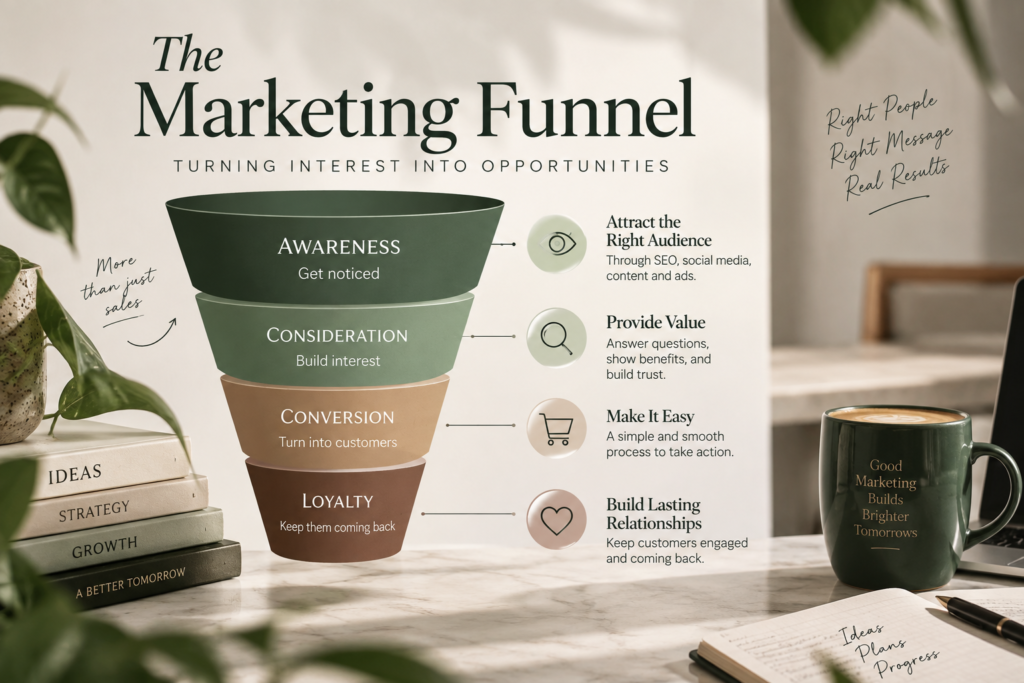
A marketing funnel is a simple way of representing the customer journey. The funnel shows the different stages a person goes through before taking an action, such as making a purchase, booking a service, signing up, or contacting a business. The term “funnel” is used because many people may enter at the beginning, but only some eventually become customers. A basic marketing funnel has four stages:
Awareness → Consideration → Conversion → Loyalty
Each stage represents a different level of familiarity and intent. Let’s look at each stage in detail.
1. Awareness: "Who Are You?"
The first stage is awareness. At this point, people may not know your business exists. Your goal is to introduce your brand to the right audience and give them a reason to notice you. People might discover your business through:
- Google Search
- Social media
- YouTube
- Blog posts
- Online advertisements
- Recommendations
- Influencer content
For example, imagine someone searches Google for “best digital marketing services in Kannur.” If your website appears in the search results, that person has now become aware of your business.
At this stage, you aren’t necessarily trying to make a sale immediately. You’re trying to get noticed and create an initial connection. Educational blog posts, social media content, videos, and informative advertisements can be useful because they introduce your business without putting immediate pressure on the audience. The first interaction may seem small, but it can become the beginning of the customer’s journey.
2. Consideration: "Can You Help Me?"
Once someone knows about your business, they may want to learn more. This is the consideration stage. At this point, the potential customer may have a specific problem or need and may be comparing different solutions. They are trying to decide which business, product, or service is right for them. The potential customer might:
- Visit your website
- Read your blog
- Check your services
- Compare your business with competitors
- Read reviews
- Follow you on social media
- Watch your videos
- Download a resource
At this stage, your job is to provide useful information and build trust. For example, someone looking for digital marketing services might read your article about how to create a digital marketing strategy for a small business. They may not contact you immediately, but they are learning about your expertise and deciding whether your business could help them. This is why useful content is important. Case studies, testimonials, FAQs, detailed service pages, educational articles, and demonstrations can help potential customers make a more confident decision.
3. Conversion: "I'm Ready to Take Action"
The next stage is conversion. This is where a potential customer takes the action you want them to take. Depending on your business, a conversion could be:
- Making a purchase
- Filling out a contact form
- Booking a consultation
- Calling your business
- Signing up for an email list
- Requesting a quotation
For example, after reading your blog and exploring your services, someone might click “Book a Free Consultation.” They have moved from simply considering your business to taking action. However, getting someone to this stage doesn’t mean the process should become complicated. If your website has a confusing layout, unclear information, a long form, or a weak call to action, an interested customer may leave. A simple and clear conversion process makes it easier for people to take the next step.
4. Loyalty: "I'll Come Back"
The customer journey doesn’t end after a purchase. At this point, the final stage is loyalty. A good business doesn’t only focus on getting new customers. It also works to keep existing customers happy and build long-term relationships. In addition, businesses can build loyalty through:
- Excellent customer service
- Personalized emails
- Loyalty programs
- Helpful content
- Follow-up communication
- Special offers
- Consistent customer support
A satisfied customer may return, purchase again, leave a positive review, or recommend your business to someone else. This makes loyalty an important part of the marketing funnel. In fact, an existing customer who already trusts your business may be easier to engage than someone discovering your brand for the first time.
Where Does Digital Marketing Fit Into the Funnel?
Different digital marketing channels can support different stages of the customer journey. During the awareness stage, businesses can use SEO, social media, display advertising, and content marketing to introduce their brand to potential customers. During the consideration stage, blog posts, videos, email marketing, and customer reviews can provide more information and help build trust. At the conversion stage, Google Ads, landing pages, special offers, and clear calls to action (CTAs) can encourage customers to take the desired action. Once someone becomes a customer, email marketing, social media, and customer support can help maintain the relationship and encourage loyalty.
However, these channels aren’t limited to just one stage. For example, SEO can help with awareness when someone discovers your website through Google. The same website can then provide useful information that supports the consideration stage and eventually encourage the person to make an enquiry or purchase.
The important thing is to understand what your audience needs at each stage. When different digital marketing channels work together, they can create multiple touchpoints throughout the customer’s journey and gradually move people from discovering a brand to becoming customers and eventually loyal customers.
Content for Different Funnel Stages
Content plays an important role throughout the marketing funnel, but the type of content you use should change depending on where the customer is in their journey.
Awareness Content
At the awareness stage, the goal is to introduce your brand and attract the attention of people who may not know about your business yet. Examples include:
- Blog posts
- Social media posts
- Reels
- Educational videos
- SEO content
- Awareness advertisements
The goal is to help people discover your business and create initial awareness.
Consideration Content
At the consideration stage, people already know about your business but may still be comparing different options. They need more information and reasons to trust you. You can use:
- Case studies
- Customer reviews
- Testimonials
- Detailed guides
- FAQs
- Comparison articles
- Service pages
The goal is to answer their questions, build trust, and reduce uncertainty.
Conversion Content
At the conversion stage, customers are closer to making a decision. Your content should make it easy for them to take the next step. Examples include:
- Landing pages
- Free consultations
- Special offers
- Product demonstrations
- Clear calls-to-action (CTAs)
- Contact forms
The goal is to make the next step simple and clear.
Loyalty Content
The funnel does not necessarily end after a customer makes a purchase. Businesses can continue engaging with customers and encourage them to return. Examples include:
- Follow-up emails
- Helpful content
- Personalized recommendations
- Loyalty programs
- Customer support
- Exclusive offers
The goal is to encourage repeat purchases and build long-term customer relationships.
Simple Example: A Local Café
Imagine a café wants to attract more customers.
- Awareness: The café shares an Instagram Reel showing its signature croissant and coffee.
- Consideration: A potential customer visits the café’s website and reads the menu, reviews, and information about the café.
- Conversion: The café offers a special breakfast combo with a clear “Order Now” or “Book a Table” CTA.
- Loyalty: After the visit, the café sends a thank-you message and offers a loyalty reward for the customer’s next visit.
This example shows how different types of content can support customers at different stages of the marketing funnel.
Why Is a Marketing Funnel Important?
- Helps understand the customer journey: A marketing funnel shows how people move from discovering a brand to considering it, making a purchase, and becoming loyal customers.
- Recognizes that not everyone is ready to buy: Some customers may need more information before making a decision. The funnel helps businesses communicate with them at the right stage.
- Helps create the right content: Different stages require different types of content. For example, educational content works well during awareness, while reviews and comparisons can help during consideration.
- Builds trust before asking for a sale: Instead of immediately asking customers to buy, businesses can provide useful information and gradually build familiarity and trust.
- Makes conversion easier: At the conversion stage, clear calls-to-action, simple landing pages, offers, and an easy purchasing process can encourage customers to take action.
- Helps identify where customers drop off: If a website gets plenty of visitors but very few enquiries or purchases, the funnel can help identify where the problem might be.
- Improves marketing strategies: Understanding each stage allows businesses to choose the right channels, messages, and campaigns for their audience.
- Encourages customer loyalty: The funnel doesn’t end after a purchase. Good customer service, follow-up emails, useful content, and engagement can encourage customers to return.
- Prevents businesses from selling too early: Someone who has just discovered a brand may not respond well to a “Buy Now” message. The funnel helps businesses build the relationship first.
- Creates a better customer experience: When customers receive the right information at the right time, their journey becomes more helpful, relevant, and comfortable.
How to Improve Your Marketing Funnel
If your marketing isn’t producing enough customers, don’t immediately assume you need more traffic. The problem could be happening at a different stage of the funnel. First, ask whether enough people are discovering your business. If not, focus on awareness through SEO, social media, content marketing, or advertising. When people are visiting your website but aren’t taking action, your website content, messaging, offer, landing page, or calls-to-action may need improvement. For visitors who reach the checkout or enquiry stage but leave, look at factors such as pricing, forms, user experience, and the checkout process. Similarly, if existing customers aren’t returning, focus on customer experience, follow-up marketing, loyalty programs, and customer retention. By understanding each stage of the marketing funnel, you can identify where the problem actually is instead of making random changes or simply spending more money to attract traffic.
Common Marketing Funnel Mistakes
- Trying to Sell Too Early: Not every person who discovers your business is ready to buy. Give potential customers time to understand your brand and the value you provide.
- Using the Same Message for Everyone: A first-time visitor may need a different message from someone who has already visited your website several times. Tailor your content to their stage in the customer journey.
- Ignoring Existing Customers: Businesses often focus heavily on attracting new customers while forgetting about people who have already purchased. Building relationships with existing customers can encourage repeat purchases and loyalty.
- Making the Conversion Process Complicated: If customers have to complete too many steps before purchasing or contacting you, they may leave. Keep the process simple, clear, and easy to follow.
- Measuring Only Sales: Sales are important, but they aren’t the only useful measurement. Traffic, engagement, leads, enquiries, email sign-ups, and repeat purchases can also provide valuable insights into how your funnel is performing.
Marketing Funnel vs Sales Funnel: How the Customer Journey Really Works
You may also hear the term sales funnel, which is closely related to the marketing funnel but focuses on a slightly different part of the customer journey. A marketing funnel generally focuses on attracting people, creating awareness, building interest, and nurturing potential customers, while a sales funnel focuses more specifically on turning prospects into paying customers. In many businesses, both work together, with marketing bringing the right people into the journey and sales helping qualified prospects move toward a purchase. However, the customer journey is not always a straight line. Someone might discover your brand today, forget about it, see your advertisement next month, visit your website, read a review later, and finally make a purchase. Customers can move backward and forward between different stages depending on their needs and decisions. Therefore, businesses should maintain a consistent presence across multiple channels and provide useful information and a consistent experience whenever customers interact with the brand. The goal is not to force people through the funnel, but to support them throughout their journey and make each interaction valuable.
Final Thoughts
A marketing funnel is simply a way to understand how people move from discovering your business to becoming customers and eventually loyal customers. The four basic stages are:
Awareness → Consideration → Conversion → Loyalty
Understanding these stages can help you create better content, run more effective advertising campaigns, improve your website, and communicate with customers at the right time. It’s also important to remember that not everyone is ready to buy immediately. Some people may only be researching, while others may need more time to compare different options and build confidence before making a decision. Instead of giving everyone the same message, businesses should provide the right information and experience based on where customers are in their journey.
Every customer journey is different. Some people may convert within minutes, while others may need weeks or months of research and interaction before making a decision. A successful marketing funnel recognizes these differences and helps customers move forward at their own pace. The strongest funnels don’t simply focus on getting people to buy. They focus on building awareness, creating trust, removing doubts, making decisions easier, and continuing the relationship after the purchase. Because successful digital marketing isn’t just about getting attention. It’s about turning attention into interest, interest into trust, trust into action, and customers into lasting relationships.